Work
Selected work.
A career in chapters.
Brand and demand, built in one system. Shipped on a clock. Measured against revenue.
01
Concord.
Four legacy products, one brand, two months to launch.
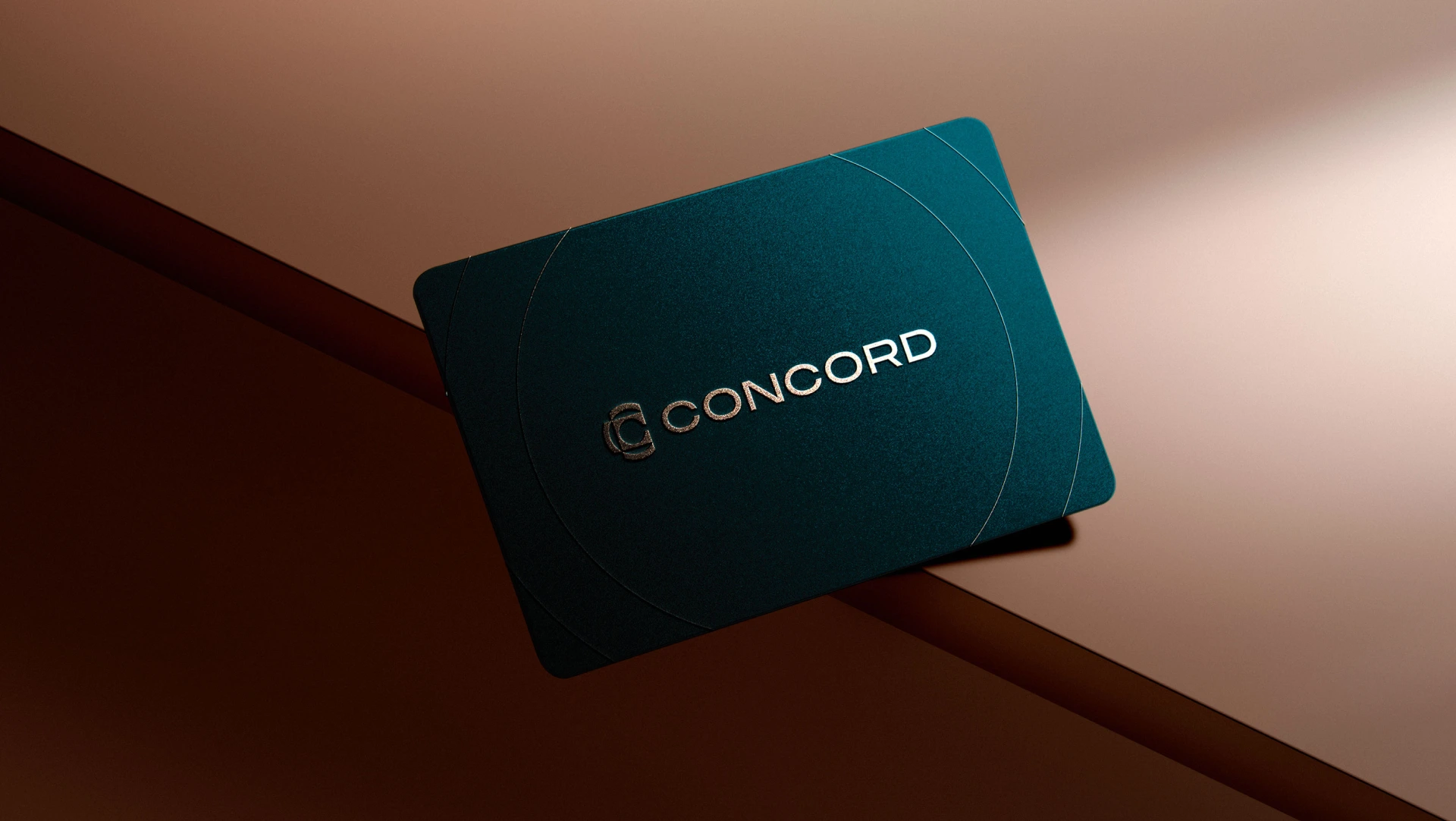
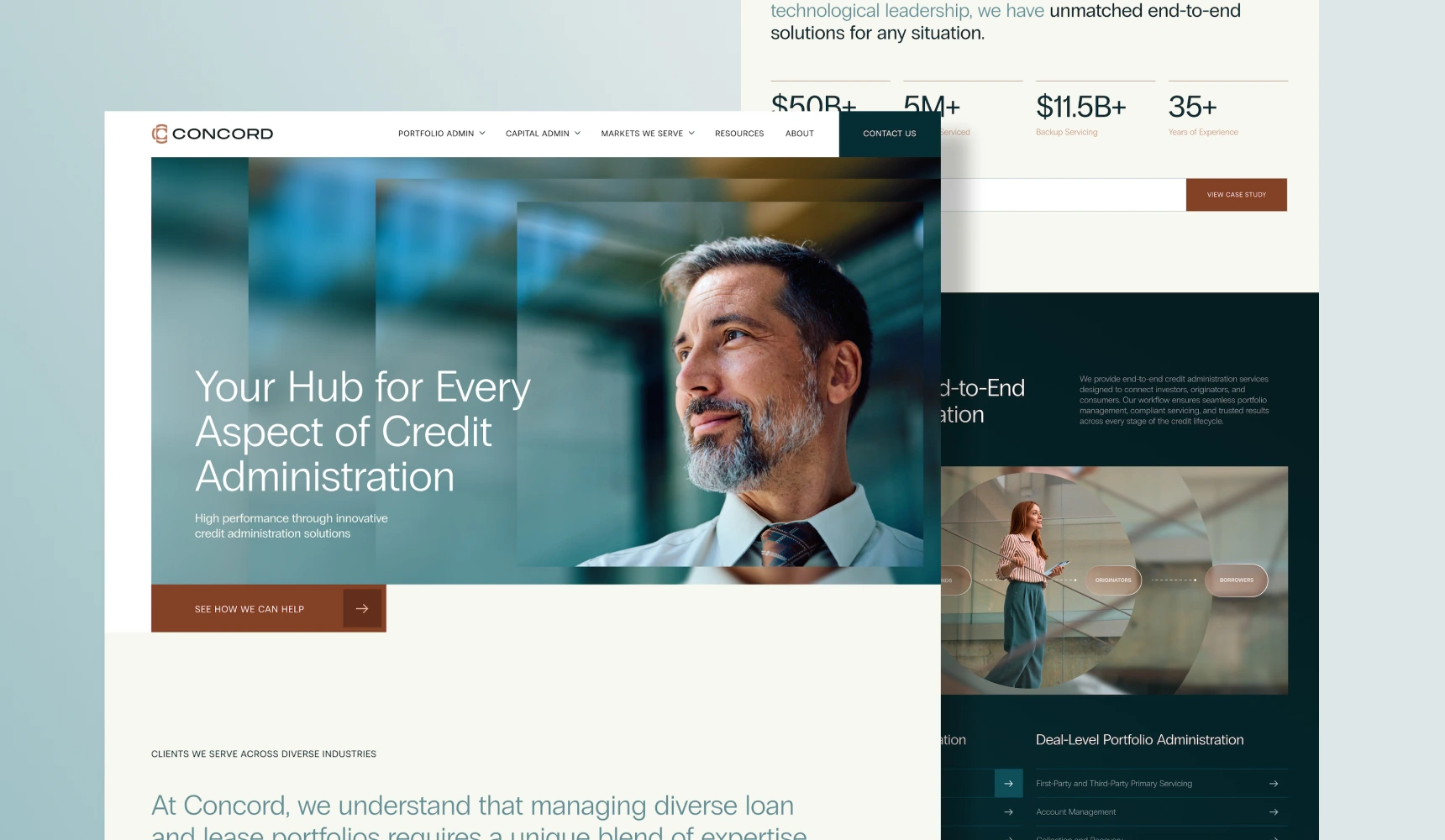
GTCR acquired Concord with a thesis: unify three companies into one credit administration platform. My mandate covered the brand, the website, and the sales infrastructure that had to make that thesis visible to the market. The clock ran from deal close to launch.
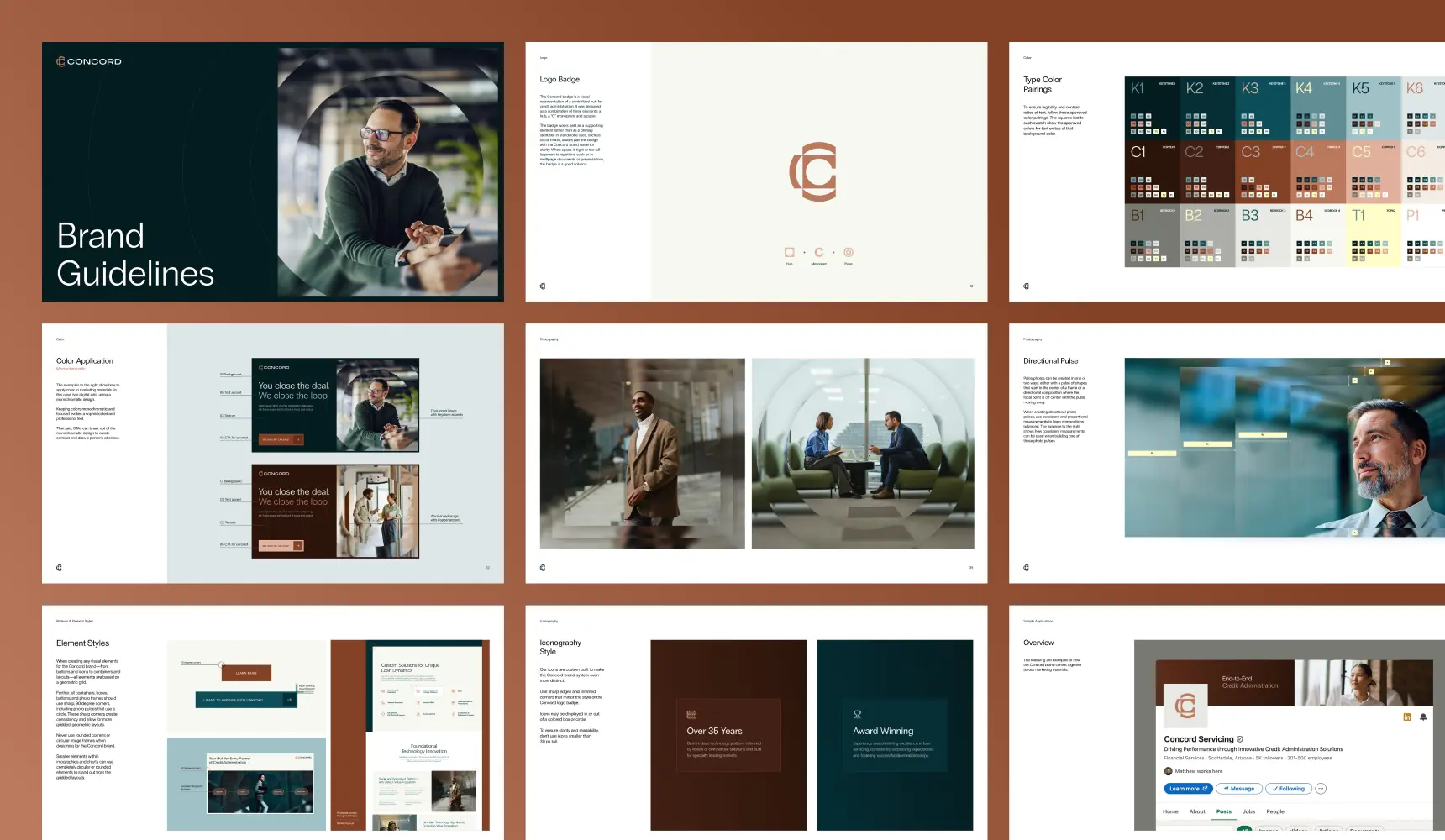
Four legacy product names (InterLink, TrueBI, C2, ConcordPay) retired and replaced with one architecture: ConcordLink. Positioning line: “The hub for credit administration. From investor to borrower.” Two months from kickoff to launched brand at concordfinance.com, with 53 pages of visual and verbal guidelines underneath, sales collateral shipped in parallel, and three acquired-company websites folded into one.


02
Ubiquity.
From low-cost vendor to AI-enabled CX partner.

Ubiquity had outgrown its identity. Years of rapid growth left the visual system stitched together, and the CX space was full of neon-bright competitors shouting tech capability. The work: rebuild the brand to reflect what the business had already become. A global AI-enabled CX partner with a human-first philosophy.
The brand system turned the colon in the Ubiquity logomark into a symbol of connection and omnipresence, replaced intense neon with warmer color, and rewrote the voice around human expertise plus technology. Positioning was tested with sales before launch so the new brand and the commercial motion shipped as one push. Tripled digital engagement and doubled enterprise win-rate in the twelve months after launch.


03
Verizon. Powerful Answers.
From phone company to technology company.
Verizon was quietly doing serious work in healthcare, education, and sustainability. Nobody outside the company knew. The Powerful Answers platform put that innovation pipeline on television and tied it to a $10M startup capital commitment from CEO Lowell McAdam, with the winner chosen at CES.
Inside my integrated marketing function, I owned the CRM, lifecycle, and cross-channel execution that turned brand spots into pipeline impact. The programs ran trigger-based, modeled, and measured against hold-out control cells. Take-rate lifts on upgrade and acquisition programs ran 100 to 180 percent over control. One lifecycle program took second place at the Content Marketing Awards on a 33 percent open rate. Across the decade: $4.6B incremental revenue from integrated campaigns, a 15 percent retention lift from Verizon’s first global omnichannel CRM, and a 20 percent cost reduction on a $275M budget.

04
Verizon. go90.
An OTT video bet, a decade early.

go90 was Verizon’s over-the-top mobile video play, built for millennials with a mix of syndicated and original content. The product ultimately closed. The strategic thesis behind it, short-form mobile video and creator-led content, now sits at the center of what TikTok, Instagram, and YouTube Shorts have become.
As Director of Integrated Marketing, I pulled the launch together across the new Verizon Media unit and the legacy wireless marketing teams. Two organizations, two operating rhythms, one GTM. We wrapped subway stations and ran OOH through the nine hippest neighborhoods in America, stood up a social content engine around the shows, and coordinated partner creative across AKQA and other studios. The audience research, content pathways, and editorial frameworks held up. The distribution environment and economic model did not.
I include this work because the operating lessons were real. Pattern recognition on new formats matters. So does the discipline to commit, ship, measure, and stop when the thesis fails.


05
Verizon. 2011.
Susie’s Lemonade Stand: winning small business through empathy.
Verizon Wireless was losing small business share to competitors who had reduced the category to price and line count. The problem underneath the price problem: small business owners did not believe Verizon understood them. Research inside our CRM programs surfaced the sharper insight. The things business owners spend most of their day on have almost nothing to do with the reason they started a business. Owning a company feels very different from the dream. That gap was the opening.
Instead of standard product-and-feature print, we wrapped Fast Company with America’s ultimate small business, a nine-year-old named Susie running a lemonade stand. The creative showed how Verizon’s small business technology handled the operating realities so Susie could stay focused on the reason she started. We auctioned the only bottle of Susie’s Lemonade on eBay for Alex’s Lemonade Stand Foundation, a childhood cancer charity. 98 percent of small business owners came away agreeing Verizon can make their business better. Small business sales rose 12 percent.

